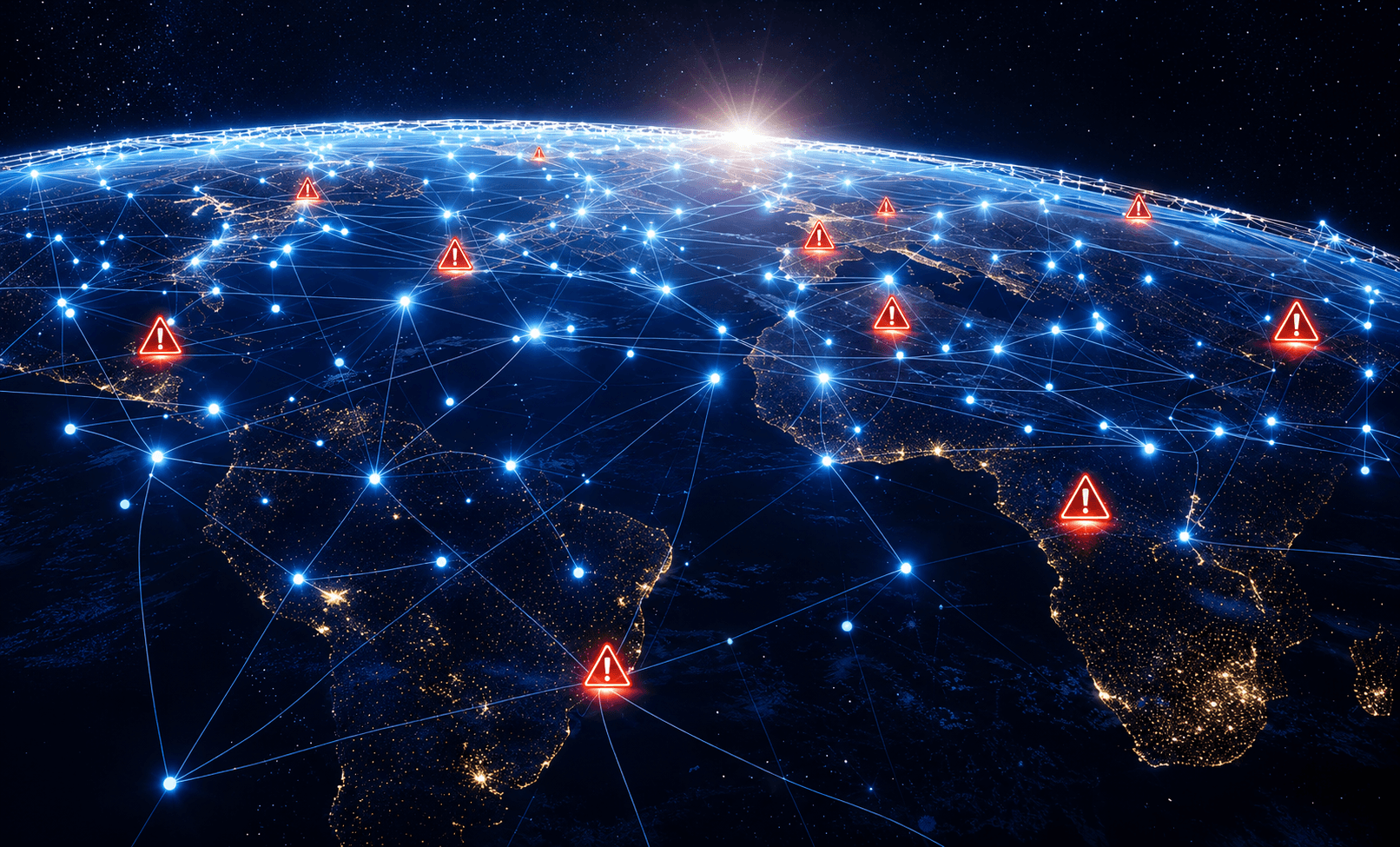
We are entering a period where uncertainty is no longer an exception. Tariffs, sanctions, epidemics, export controls, regional supply chain shifts, and geopolitical instability are reshaping how organizations procure, sell, and manage risk.
Procurement, legal, finance, and C-level teams are all asking the same question:
When the external environment shifts, how quickly can our organization understand its (contractual) exposure?
Many businesses still treat contracts as something static. A piece of paper that secured the deal at the time and can be forgotten in a drawer (or a shared drive). They are signed, stored, and revisited only when a dispute, renewal, audit, or supplier issue appears. But in today’s environment, that approach is no longer sufficient. Contracts are not only legal documents. They define supplier dependencies, pricing mechanisms, exit rights, renewal obligations, risk allocation, compliance duties, and commercial flexibility.
In other words, contracts determine how resilient an organization really is.
The New Risk Landscape:
Tariffs, Barriers, and Supplier Dependency
Events like COVID, the Suez Canal obstruction, Trump’s tariffs, Strait of Hormuz blockade, etc., have shown how quickly global market conditions can change. New tariffs can alter the economics of a supplier relationship overnight. Market barriers can limit access to materials, products, or regions. Geopolitical developments can affect logistics, compliance obligations, and the availability of critical suppliers.
For many organizations, the challenge is not only the disruption itself. The challenge is that they cannot immediately identify which suppliers and contracts are affected.
If a tariff increases the cost of a product category:
- Which supplier agreements allow price adjustments?
- Which supplier agreements allow price adjustments? Which agreements contain fixed pricing, minimum purchase commitments, or volume obligations?
- Which suppliers’ facilities are located in the affected regions?
- Which contracts provide termination or renegotiation?
Without contract intelligence, these questions often trigger manual searches across shared drives, email inboxes, legacy repositories, and disconnected systems. By the time the relevant information is gathered, the commercial impact may have already materialized.
Vendor Lock-In Is Often Hidden in Contract Language
Vendor lock-in is commonly known as a technology issue, but it is also a contractual issue.
An organization may appear to have supplier flexibility, while the contract tells a different story. Long notice periods, automatic renewals, exclusivity clauses, minimum volume commitments, restrictive termination rights, transition limitations, data portability issues, and high exit costs can all limit the ability to respond quickly when conditions change.
These clauses may not create a problem when the market is stable. But when tariffs increase, suppliers underperform, and regulations change, hidden lock-in can become a strategic constraint.
The risk is not simply that the organization is dependent on a supplier. The risk is that it does not know the depth of that dependency until it needs to act.
Contracts as a Source of Supplier and Market Intelligence
Every contract contains valuable business intelligence. Supplier agreements reveal information like pricing structures, service levels, delivery obligations, liability limits, renewal dates, termination rights, audit rights, and escalation procedures. Across an entire contract portfolio, this info can show patterns of dependency and exposure. Especially in procurement and supply chain management. Supplier resilience cannot be assessed only through operational data. It also depends on the rights and obligations embedded in contracts.
A supplier may be operationally critical, but the contract may lack adequate continuity obligations. A relationship may appear commercially attractive, but the agreement may include weak audit rights or restrictive exit terms. A supplier may be located outside a high-risk region, but the contract may depend on subcontractors, materials, or logistics routes that create indirect exposure.
AI contract intelligence helps organizations move from individual document review to portfolio-level understanding.
From Archive to Risk Radar
Traditional contract repositories help organizations store documents. Contract intelligence helps them understand their entire contractual portfolio and act on it.
With AI-powered contract intelligence, organizations can automatically extract key metadata, identify critical clauses, classify obligations, detect risk patterns, and monitor upcoming events.
This changes the role of contract management. Instead of asking, “Where is the contract?” teams can ask:
- Which contracts are exposed to a tariff change?
- Which agreements contain automatic renewals or restrictive termination clauses?
- Where do we have price adjustment rights?
- Which contracts lack sufficient audit or compliance protections?
- Which suppliers are critical but contractually under-governed?
- Which contracts should be reviewed before the next renewal cycle?
These are not only legal questions. They are business questions.
The importance of Contract Intelligence for Better Risk Management across organizations
Contract intelligence enables organizations to respond earlier and more strategically.
For procurement teams, it is the visibility into supplier obligations, commercial terms, renewal deadlines, and dependency risks. For legal teams, it provides an opportunity for faster review of clauses affecting liability, compliance, termination, and renegotiation. For finance teams, it helps identify cost exposure, pricing mechanisms, penalties, and revenue or spend commitments. For leadership, it provides a clearer dashboard of enterprise risk.
Speed matters in any market, but it is critical in a volatile market.
The organizations that can quickly identify their exposure are better positioned to renegotiate, protect margins, and make informed business decisions.
This is where AI becomes invaluable. Not because it replaces human judgment, but because it makes contractual information accessible to the decision makers at a speed never even imaginable before.